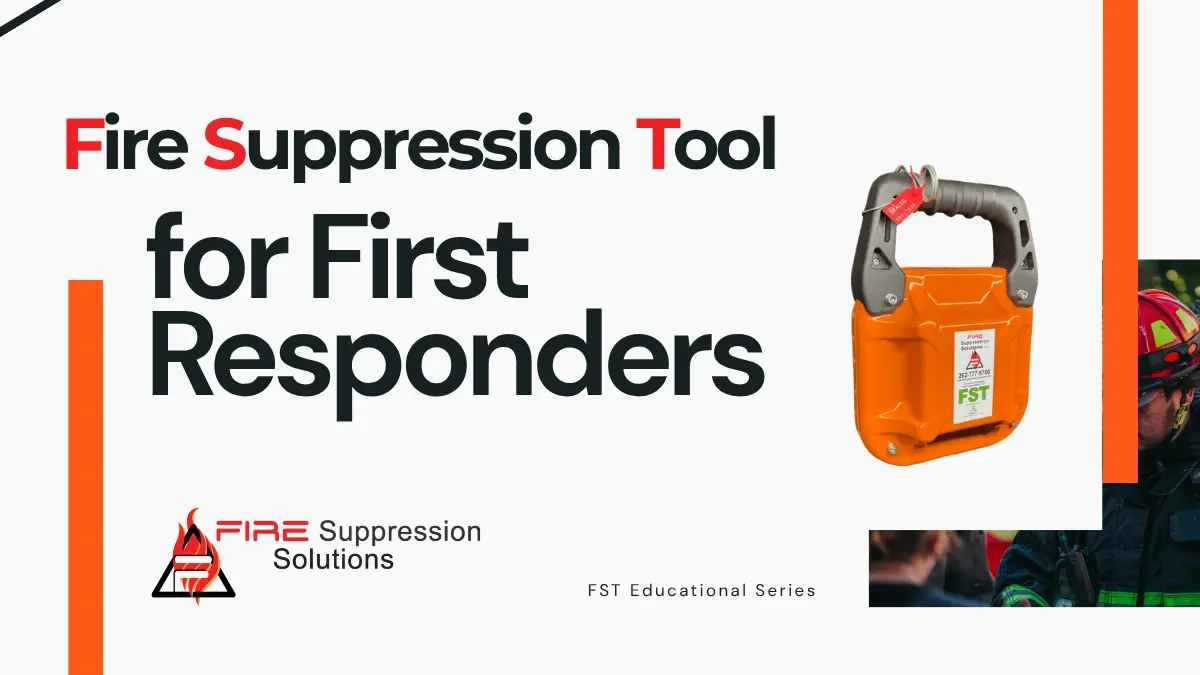
The Fire Suppression Tool (FST) gives trained firefighters, police officers and other first responders an additional portable fire suppression option for appropriate fire conditions.
The FST is a non-pressurized device that is activated and deployed into an affected area. Once deployed, it releases a fire suppression aerosol throughout the contained space, reducing heat and interrupting the chemical chain reaction that allows the fire to continue burning, without depleting oxygen.
For public-safety agencies, the FST is best understood as another capability within an established fire response, not a replacement for department procedures, required portable fire extinguishers or conventional firefighting methods.
Where Does the FST Fit Into First-Responder Fire Response?
No single suppression tool is appropriate for every fire.
First responders must evaluate the scene, fire conditions, available access and department procedures before deciding whether FST deployment is appropriate.
The FST is designed to perform best when the fire is within an enclosed or contained area and the device can be deployed near the seat of the fire.
Once deployed, the FST releases aerosol throughout the affected space rather than requiring a responder to continuously remain near the fire and direct an extinguishing agent toward it.
One FST is designed to provide coverage of up to 5,300 cubic feet under appropriate conditions, with an aerosol discharge lasting approximately 35 seconds.
The FST can also significantly reduce heat, with documented product performance of up to 1,000°F of temperature reduction within 35 seconds under appropriate conditions.
The device should be incorporated into an incident response based on training, conditions and applicable agency procedures.
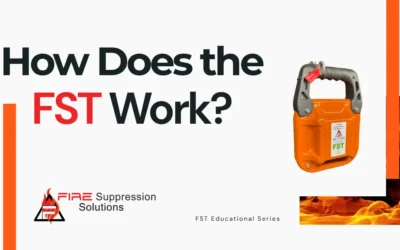
For a deeper explanation of the suppression process, see how the Fire Suppression Tool works.
Why Should Law Enforcement Carry a Fire Suppression Tool?
Police officers are often already responding throughout a community when an emergency call comes in, including incidents involving fire.
For trained law enforcement personnel, carrying an FST can provide an additional suppression option when they encounter an appropriate fire condition and agency policy supports its use.
Several characteristics make the FST particularly relevant to public-safety response:
- Portable: The complete unit weighs approximately 11.24 pounds.
- Non-pressurized: The FST does not rely on a traditional pressurized extinguisher cylinder.
- Two-pin activation: The device uses a defined manual/electronic activation sequence.
- Approximately 8-second countdown: Once fully activated, aerosol release begins after approximately eight seconds.
- Remote deployment: The device is deployed into the affected area rather than requiring the responder to continuously remain near the fire while applying an extinguishing agent.
- Contained-space suppression: The aerosol expands throughout an appropriately contained area.
- Heat reduction: The FST can reduce temperatures by up to 1,000°F within 35 seconds under appropriate conditions.
- No oxygen depletion: The FST suppresses fire without removing oxygen from the affected space.
These characteristics do not change the need for training, judgment or the appropriate fire response.
Officers should never enter a burning structure simply to deploy an FST, and use of the device does not replace activation of the fire department or other required emergency response.
For agencies evaluating the FST, real-world deployment footage and documented first-responder experiences can provide useful context alongside product specifications and training.
What Should Firefighters Know About the FST?
For firefighters, the FST’s role is less about the simplicity of activation and more about how the device interacts with the fire environment.
The FST is a total-flood fire suppression device.
Its aerosol disperses throughout the affected space and works most effectively when an adequate concentration can be maintained within that area.
That creates several important operational considerations:
- containment matters during initial suppression
- ventilation can reduce aerosol concentration
- deployment does not eliminate the need to evaluate remaining fire conditions
- remaining hotspots may still require water or another appropriate extinguishing agent
- normal fire-scene respiratory and protective precautions still apply
The FST should therefore be treated as one suppression capability within the larger response rather than as a substitute for established firefighting methods.
What Should First Responders Consider Before Deployment?
Before activating the FST, responders should determine whether the device is appropriate for the conditions they are facing.
Key considerations include:
- whether the fire is within an enclosed or sufficiently contained area
- whether the FST can be deployed near the seat of the fire from a safe position
- whether the intended landing area is clear of responders and bystanders
- whether personnel in the area know that the device is about to be deployed
- whether FST deployment aligns with applicable training and department procedures
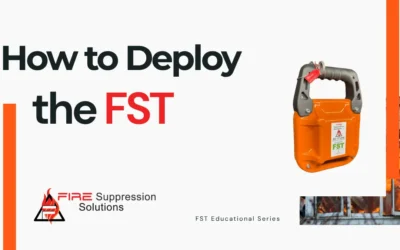
Once the Igniter Pin has been removed, the FST begins an approximately 8-second countdown that cannot be stopped or reset.
The device must then be deployed immediately into the intended area.
For the complete activation sequence, see How to Deploy the Fire Suppression Tool.
Why Does Containment Matter?
Containment is a key part of FST performance.
The aerosol must remain within the affected area at an effective concentration while it acts on the fire. Opening the space or introducing ventilation too early allows aerosol to escape and can reduce the concentration available for suppression.
After the FST is deployed, the affected space should therefore remain as contained as possible during the initial suppression period.
This is also why the FST performs best in enclosed or contained spaces rather than large, open environments.
For more detail on the relationship between aerosol dispersion and suppression, see How Does the Fire Suppression Tool Work?
How Does Ventilation Affect FST Performance?
Ventilation can reduce the concentration of the FST aerosol within the affected space.
For first responders, that means ventilation strategy and FST deployment should not be treated as unrelated actions.
Maintaining containment during the initial suppression period gives the aerosol the opportunity to remain concentrated within the area where it is needed.
Departments incorporating the FST into response procedures should address the relationship between containment, ventilation and deployment during training so responders understand how those actions affect device performance.
What Happens After FST Deployment?
FST deployment does not end the fire response.
Personnel should not enter the affected space while the device is still discharging. The aerosol should be allowed adequate time to act on the fire before responders enter the area.
Once conditions allow, qualified personnel should:
- reassess the affected space
- identify remaining fire or hotspots
- use water or another appropriate extinguishing agent when needed
- ventilate the space when appropriate
- continue normal overhaul and incident procedures
The FST aerosol itself is described as non-toxic, but that does not mean a fire-affected environment is free of respiratory hazards.
Smoke, combustion byproducts and residue from the materials involved in the fire may still be present.
Personnel entering the affected area should use appropriate protective clothing and respiratory protection based on the conditions and their established procedures.
Does the FST Replace a Fire Extinguisher?
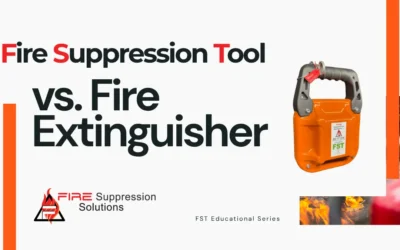
No. The Fire Suppression Tool is a fire suppression device, not a portable fire extinguisher, and it is not intended to replace portable fire extinguishers required under NFPA 10.
The two tools also operate differently.
A conventional handheld extinguisher generally requires someone to remain in position and direct an extinguishing agent toward the fire. The FST is deployed into a contained area, where its aerosol expands throughout the space.
That makes them different fire-response tools rather than interchangeable products.
For a complete comparison, see Fire Suppression Tool vs. Fire Extinguisher.
Training Comes Before Deployment
The FST should be familiar equipment before it becomes emergency equipment.
Users should be trained in the activation sequence, understand what happens once the Igniter Pin is removed and know how containment affects FST performance before they encounter a real fire.
For fire departments, police departments and other public-safety organizations, the device should also be incorporated in accordance with agency policies, operating procedures and applicable training.
The FST adds a suppression option. It does not replace professional judgment.
Is the Fire Suppression Tool Right for Your Department?
For agencies evaluating fire-response equipment, the question is not simply whether the FST can suppress fire.
The more useful questions are how the device would fit within existing response procedures, who would be trained to carry and deploy it, where it would be located, and which fire conditions are appropriate for its use.
The FST provides trained first responders with a portable, non-pressurized suppression option designed for appropriately contained fire conditions.
Understanding how it works, how it is deployed and how it fits alongside existing response equipment should come before any purchasing decision.
For complete product specifications, applications and purchasing information, visit the Fire Suppression Tool product page.
Continue Learning About the Fire Suppression Tool
- How Does the Fire Suppression Tool Work?
- How to Deploy the Fire Suppression Tool
- Fire Suppression Tool vs. Fire Extinguisher
- View the Fire Suppression Tool